

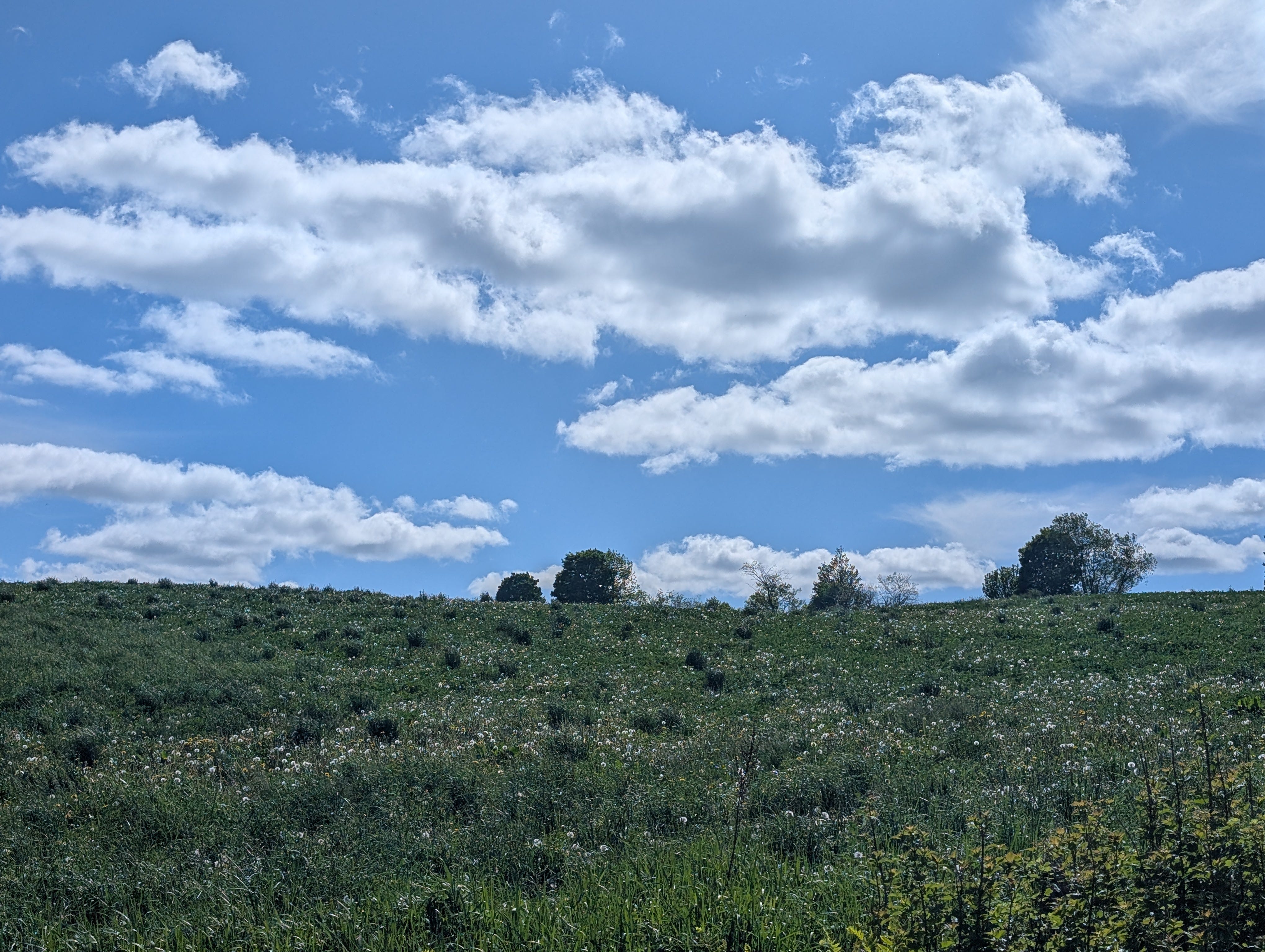
In the beginning when God created the heavens and the earth, the earth was a formless void and darkness covered the face of the deep, while a wind from God swept over the face of the waters. Then God said, “Let there be light”; and there was light. And God saw that the light was good; and God separated the light from the darkness. God called the light Day, and the darkness he called Night. And there was evening and there was morning, the first day.
And God said, “Let there be a dome in the midst of the waters, and let it separate the waters from the waters.” So God made the dome and separated the waters that were under the dome from the waters that were above the dome. And it was so. God called the dome Sky. And there was evening and there was morning, the second day.
And God said, “Let the waters under the sky be gathered together into one place, and let the dry land appear.” And it was so. God called the dry land Earth, and the waters that were gathered together he called Seas. And God saw that it was good. Then God said, “Let the earth put forth vegetation: plants yielding seed, and fruit trees of every kind on earth that bear fruit with the seed in it.” And it was so. The earth brought forth vegetation: plants yielding seed of every kind, and trees of every kind bearing fruit with the seed in it. And God saw that it was good. And there was evening and there was morning, the third day.
And God said, “Let there be lights in the dome of the sky to separate the day from the night; and let them be for signs and for seasons and for days and years, and let them be lights in the dome of the sky to give light upon the earth.” And it was so. God made the two great lights—the greater light to rule the day and the lesser light to rule the night—and the stars. God set them in the dome of the sky to give light upon the earth, to rule over the day and over the night, and to separate the light from the darkness. And God saw that it was good. And there was evening and there was morning, the fourth day.
And God said, “Let the waters bring forth swarms of living creatures, and let birds fly above the earth across the dome of the sky.” So God created the great sea monsters and every living creature that moves, of every kind, with which the waters swarm, and every winged bird of every kind. And God saw that it was good. God blessed them, saying, “Be fruitful and multiply and fill the waters in the seas, and let birds multiply on the earth.” And there was evening and there was morning, the fifth day.
And God said, “Let the earth bring forth living creatures of every kind: cattle and creeping things and wild animals of the earth of every kind.” And it was so. God made the wild animals of the earth of every kind, and the cattle of every kind, and everything that creeps upon the ground of every kind. And God saw that it was good.
Then God said, “Let us make humankind in our image, according to our likeness; and let them have dominion over the fish of the sea, and over the birds of the air, and over the cattle, and over all the wild animals of the earth, and over every creeping thing that creeps upon the earth.”
So God created humankind in his image,
in the image of God he created them;
male and female he created them.
God blessed them, and God said to them, “Be fruitful and multiply, and fill the earth and subdue it; and have dominion over the fish of the sea and over the birds of the air and over every living thing that moves upon the earth.” God said, “See, I have given you every plant yielding seed that is upon the face of all the earth, and every tree with seed in its fruit; you shall have them for food. And to every beast of the earth, and to every bird of the air, and to everything that creeps on the earth, everything that has the breath of life, I have given every green plant for food.” And it was so. God saw everything that he had made, and indeed, it was very good. And there was evening and there was morning, the sixth day.
Thus the heavens and the earth were finished, and all their multitude. And on the seventh day God finished the work that he had done, and he rested on the seventh day from all the work that he had done. So God blessed the seventh day and hallowed it, because on it God rested from all the work that he had done in creation.
These are the generations of the heavens and the earth when they were created.
Genesis 1:1 - 2:4a
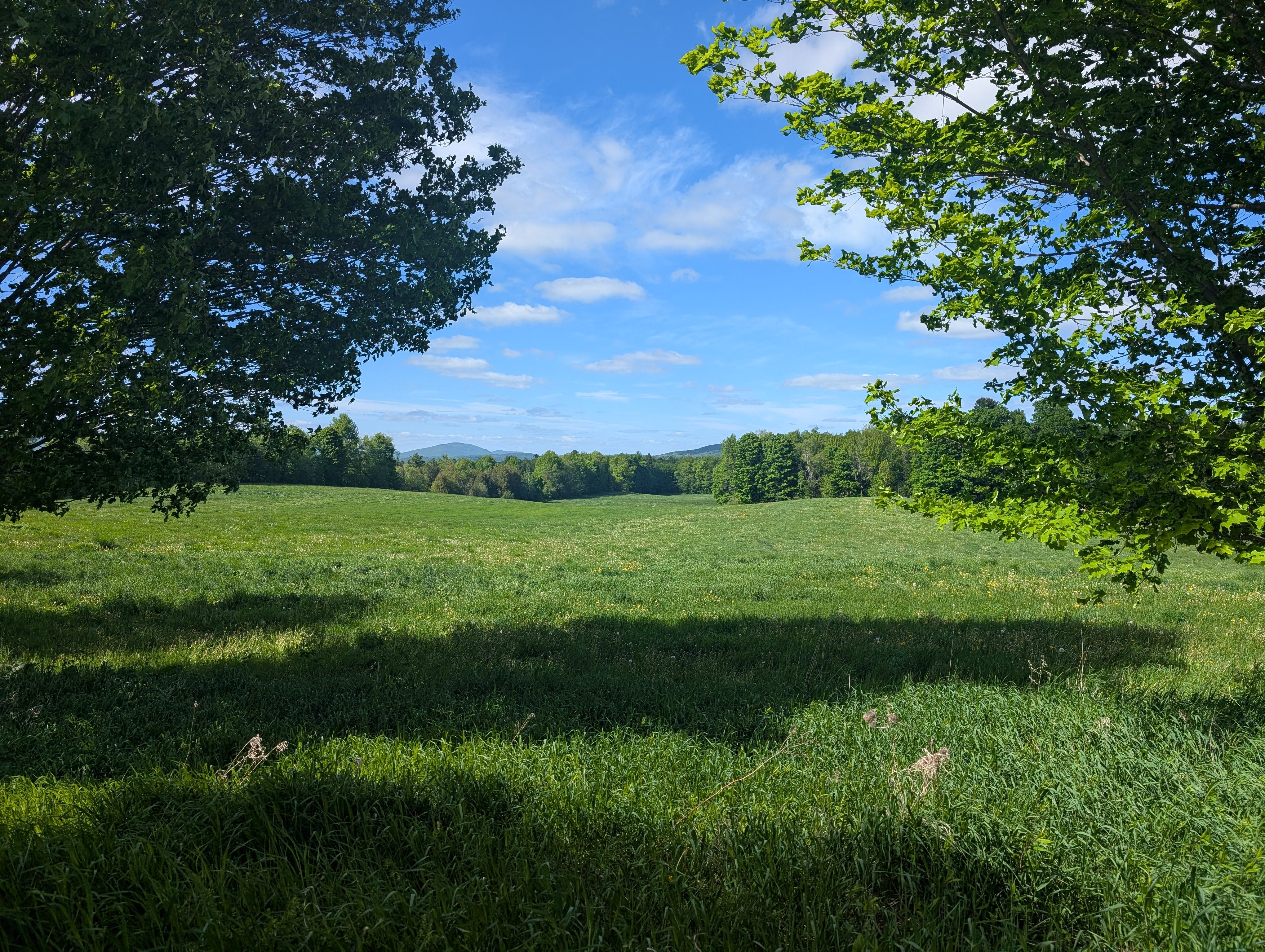
As a sophomore in high school, I became obsessed with Les Misérables, both the book and the musical, and honestly, I didn’t really know why. I mean, I thought I knew why; I was a theater kid brand of dork, and to my ears, the international cast symphonic recording was a holy grail. But there have been lots of musicals with good music. Why did this one grab me and so many people? Why was this story so popular? Was it the main human protagonist, Jean Valjean? Maybe, but there have been lots of great leads, and the story isn’t really about him anyway. It’s an ensemble show and an ensemble story, named for the downtrodden outcasts of society, or as I expertly translated it from French in high school, “The Miserables.” But why is it still the longest-running musical in the history of London’s West End?
I thought I had moved on from my fascination with this show and that relistening to it this weekend would be simply nostalgic. Instead, I found myself asking another why: why am I a nearly 38-year-old man tearing up in the Hannaford parking lot listening to Jean Valjean sing, “Who am I?” I don’t know, but I had to walk my cart with my head turned to the side to avoid eye contact with passersby.
Our Scripture reading from Genesis 1 today gives us another mystery. We are told how God made the world. But why? These first lines of Genesis don’t spell out the reasons God created, just that in the beginning, God created. All we can learn at first about the character of God is that he does not exist for himself. His essence lies in creating things beyond himself. His ultimate being desires to make other beings.
We quickly begin learning more about this God. How does he create? In the beginning, he gave of himself through speech. He didn’t overwhelm with power; he simply let the Spirit leave his lips. And what does he give? Words. The Word. And the Word he spoke, as John tells us, was himself incarnated, first in the created order of things, and eventually the man we call the Son, God in his physically embodied form. And we learn that while God was creating, he was not completely alone; the Aramaic translation of Genesis in the Targum says that God’s Spirit “fluttered over the waters like a dove.”1
And so in these first three verses, early Christians saw that a Trinity was fully present—the Father, the Word, and the fluttering Holy Spirit. From the very beginning, God was a God of relationships, not existing for only himself. After laying the foundations of the earth in the first three days, in the next three days God, speaks into being the other beings that would fill the earth and ultimately culminate in humanity, we beings made in his image, male and female. He honored us the most with not only being made in his image, but gifting us the great gift of stewarding his gifts. He made us stewards of his love.
What does being stewards of his love look like? God reveals it to us throughout Scripture. We are not merely landlords for cattle and sheep as in the Garden, but God invites us to help him cultivate his world over and over, continuing the work of his creation in freedom. God invites us to help build the Tabernacle together, then the Temple together, each of which not only reflect creation,2 but teach us about how we build up our spiritual bodies, the tabernacles and temples that we are called to be. As Pope Leo described earlier this week in his treatise about AI (which was really a treatise about humanity), we are called to steward creation in all its complexity. We steward not like the Tower of Babel, but like rebuilding the walls of Jerusalem, praying to God in repentance and guidance while serving each other in mutually sacrificial, collaborative love.
And so we steward his creation not simply by caring for land, but by caring for each other in the same self-giving love with which God made everything. In the story of Les Mis—I won’t give every spoiler away, but also, you’ve had a good 164 years to read it—Jean Valjean emerges out of decades of imprisonment an embittered man, seeming destined to be branded as a criminal his whole life, number 24601, until he is taken in by a bishop. Just as promptly as he receives this grace, Valjean robs the bishop of his silver. When the police catch him and bring him back to the bishop, the bishop tells the police no, there’s been a mistake; he had given this silver to his friend, and actually, he forgot the candlesticks. Once the police leave, the bishop tells him, “Jean Valjean, my brother, you no longer belong to what is evil but to what is good. I have bought your soul…and I give it to God.” Valjean is forever changed by this encounter with mercy, and he begins to become who God was calling him to be.
When we encounter pure grace, it is the opportunity of a lifetime to enter into a process of discipleship that we might call “becoming.” When Jesus says, “Go and make disciples of all nations” (Matt 28:19), we must first make disciples of ourselves by becoming more and more conformed to the pattern of self-giving, creative love revealed in the fine grains of creation. Take the third day, when God said let there be fruit. Fruit is not something the tree itself needs, but it’s something of itself that the tree gives away. Think about what that means: we know a tree is a healthy tree based on how well it’s giving itself away. Likewise, the fruits of the Spirit are signs that we are healthy because they show we are also giving ourselves away.
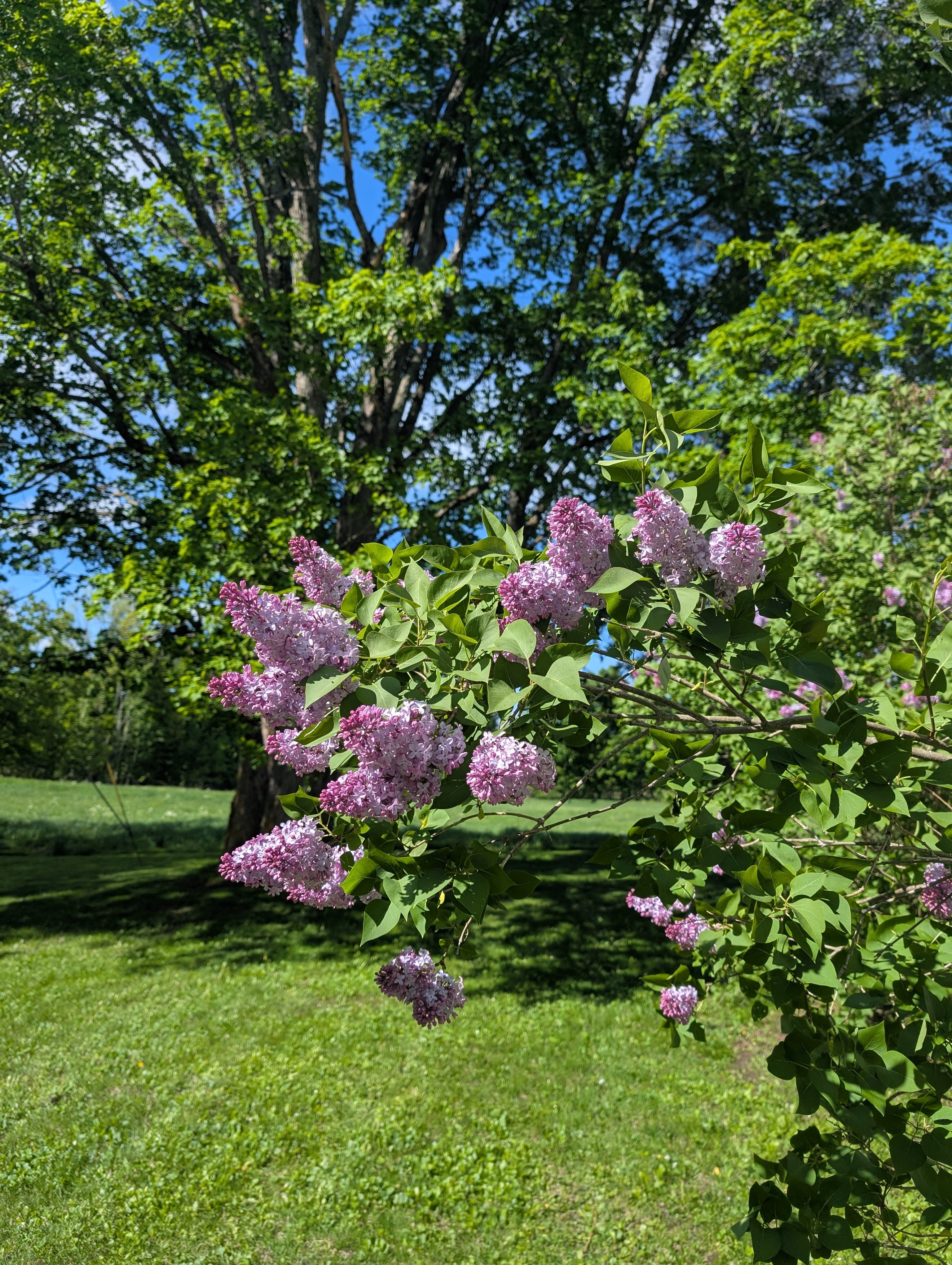
Genesis tells us all the gifts of creation act the same way: light does not exist for itself, but to point towards other things in illumination. The sky exists not for itself, but to give shape and structure to the waters. The waters gather together not for their own sake, but for the sake of dry land. And it just keeps going and going as creation keeps on giving and giving—the dry land exists for the sake of trees, which exist for the sake of fruit, which exist for the sake of all creatures, including the human creature. And finally, and here is the rub, the teaching of the rest of the Bible is that the human creature is not meant to live for the sake of itself. We live for God, and we live for God by living for each other. We know this because God lived for us so completely that he died for us as one of us. This is the triune Way. And our discipleship of “becoming” grows the more we walk in it.
But there is a great paradox of “becoming”: we can be so focused on self-becoming that it is, well, unbecoming. I know “unbecoming” sounds like a word your disapproving grandmother would use, that you’re “acting unbecoming of a Christian,” but I like it, because if “becoming” is to grow more and more into resembling God’s self-giving love, we are un-becoming when we do things that go against the pattern of creation, usually through self-centeredness. So the paradox of our development as disciples is that we don’t become better disciples for the sake of being better disciples, as Peter learned many times the hard way. The deepest nature of “becoming” cannot have our personal development as its goal, because we humans were not created to live for ourselves.
And so a big challenge of our discipleship lies in how temptation so often creeps back in to get us to live for ourselves. In that temptation, we live more and more out of fear that God’s grace is actually insufficient, that if we give ourselves over to God, we will not have what we need and will lose what we love about ourselves. This is what Thomas Merton feared before he went to the monastery: “Am I going to lose what makes me me by submitting myself to God’s will? Am I going to become less of who I am? Am I going to lose the things, the pieces of God’s love that I love about who I am, by saying, ‘Not my will, but thy will’?” But what he found, with fits and starts with his own sin, was that we actually become more of ourselves the more we submit to the eternal becoming of God, which we only do by living in the way the Trinity lives, for the sake of the Other.
So the invitation on Trinity Sunday is the invitation in creation: listen to where God is asking you to steward his world in its becoming. As long as we’re in this world, we always have opportunities for becoming by moving outward in love. The triune God so created the world and everything in it, especially you, because he so loved it. He clarified on the cross just how much he keeps on giving and giving and giving of his own spirit for us.
But before I close, I want to confess to you now that I actually do think I know why Les Mis is so good. It’s not because of the music or the human characters. In fact, it’s so good because the humans aren’t the main characters. Sure, it may be called Les Misérables—the poor, the dispossessed, the downtrodden—but the main character is the grace of God, humming beneath the surface, redeeming the outcasts in love and teaching them to better love one another. And the reason this life and creation are good is that, for as magnificent as we humans can be in God’s image, we are not the main characters of creation. The main character of this life is the One who exists not for himself, but whose very Triune being is a self-giving grace that all life is born from.
Jean Valjean’s character arc is just one powerful story of a much more amazing God. His story is powerful because he is a sinner whose journey is a process of becoming—not becoming like anyone else, not like the man society made a criminal, nor like a false image of a local hero, but becoming more and more Christ-like, which he does by becoming more and more like himself, which he does by becoming more and more invested in others. In other words, Jean Valjean only becomes Jean Valjean by caring less and less about Jean Valjean.
As the last song of the musical goes, “To love another person is to see the face of God.” And as the first song of creation sings, “The face of God exists for the sake of loving every other person.” The reason why existence exists is not for itself, but to love beyond ourselves, because love cannot love for itself. May we go and not only make disciples of all nations, but be disciples of his self-giving love for all nations. Amen.
For more discussion of this week’s texts:

h/t to Tim Keller for this point and the emphasis on self-giving love in creation
Michael Fishbane, Text and Texture
This was great, Joe. Les Mis, in all its forms, has long been my favorite story, even before I became a believer - though I couldn’t articulate why until afterwards. In solidarity, as a 29yo man I will also admit to having shed many tears during the scenes of the Bishop’s forgiveness and “who am I?”
Cheers