


Then Moses went up on the mountain, and the cloud covered the mountain. The glory of the Lord settled on Mount Sinai, and the cloud covered it for six days; on the seventh day he called to Moses out of the cloud. Now the appearance of the glory of the Lord was like a devouring fire on the top of the mountain in the sight of the Israelites. Moses entered the cloud and went up on the mountain. Moses was on the mountain for forty days and forty nights.
Exodus 24:15-18
Moses said, “Please show me your glory.” And the Lord said, “I will make all my goodness pass before you and will proclaim before you the name, ‘the Lord’, and I will be gracious to whom I will be gracious and will show mercy on whom I will show mercy. But,” he said, “you cannot see my face, for no one shall see me and live.”
Exodus 33:18-20
Six days later, Jesus took with him Peter and James and his brother John and led them up a high mountain, by themselves. And he was transfigured before them, and his face shone like the sun, and his clothes became bright as light. Suddenly there appeared to them Moses and Elijah, talking with him. Then Peter said to Jesus, “Lord, it is good for us to be here; if you wish, I will set up three tents here, one for you, one for Moses, and one for Elijah.” While he was still speaking, suddenly a bright cloud overshadowed them, and a voice from the cloud said, “This is my Son, the Beloved; with him I am well pleased; listen to him!” When the disciples heard this, they fell to the ground and were overcome by fear. But Jesus came and touched them, saying, “Get up and do not be afraid.” And when they raised their eyes, they saw no one except Jesus himself alone.
As they were coming down the mountain, Jesus ordered them, “Tell no one about the vision until after the Son of Man has been raised from the dead.”
Matthew 17:1-9
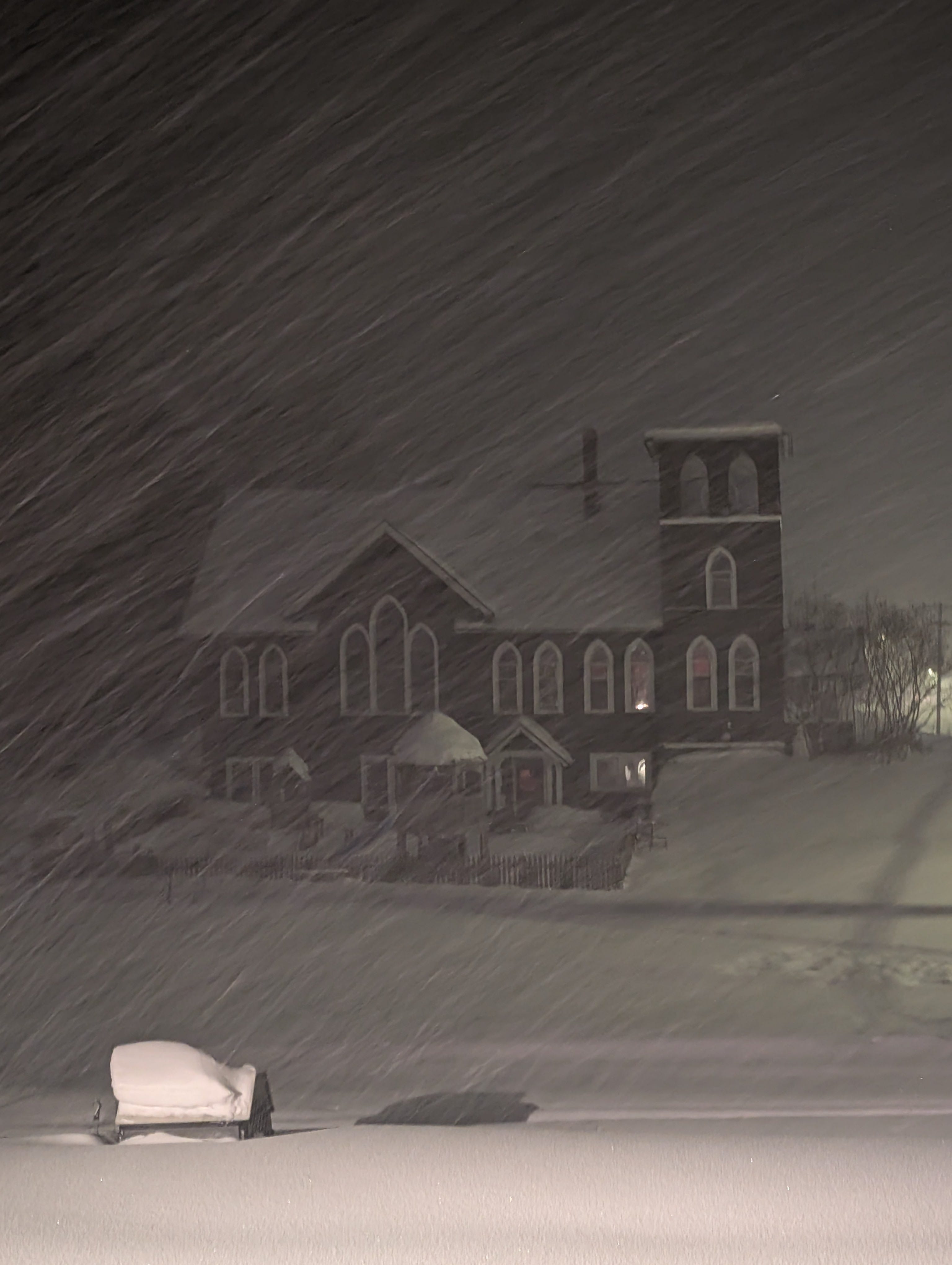
Today on Transfiguration Sunday, we behold a story about a brand new glorious appearance of Jesus. But it’s not only about appearance. It’s also a story about hiding. What do I mean? I mean that the Transfiguration is not only about how Jesus appears to us, but about how we hide from God in plain sight.
Scripture can be tricky for us when it is both familiar and strange, so rather than just read it with our hearts, our brains get into analytical mode. Why does the Transfiguration get its own special Sunday? Why does Peter react how he does? Why does Jesus reveal himself this way and then conceal himself again?
We want to approach it like a puzzle to figure out, rather than being smacked in the face by the awe that the disciples actually felt on that mountain. Granted, it’s hard to have such secondhand awe; we may get more excited listening to a friend’s story about a vacation they just took to an exotic national park than we do hearing this story. And I feel like if I read this story with as much awe and reverence as the disciples felt on that day, some of you might think, “Joe has really gone out to lunch.”
If you do want one clue to this puzzle, take our reading from Exodus 24 where Moses goes up on Sinai and also has an awe-some and awe-full encounter with a new revelation of God. Remember what also happens later in Exodus 33 where Moses wants to see God in his full glory, but God says no, you can’t handle my full glory or it would kill you. You can see my goodness, I will proclaim my name, and I will have mercy on who I will have mercy…but my face? That would kill you. My glory will pass by you to see my back, Moses, but not my face.
Right after, God makes a place for his presence among his people, telling Moses how to build a tabernacle, the special tent that would move with God’s people wherever they went while also keeping them safe from God’s glory.
Why did they need to be kept safe from God’s glory? Because they—we—are sinners. We talked in our Sunday School class about what God’s glory entails, and there’s a lot of ways to slice it. But one way to think of the glory of God is the purest distillation of the creative force at the heart of the entire universe. Could you stand next to the Big Bang and live? Heck, we in Vermont had the eclipse two years ago, and we can’t even look at the sun 93 millions miles away without special little glasses. How are we to possibly see the Almighty who created that?
The Israelites knew that humanity is an impure people. They knew we could never fully and finally resolve our state of decay, which is most embodied in our subjugation to the forces of death. We could make sacrifices to God to ritually purify ourselves before Him, that some of us could be safe enough from his glory in his veiled presence.
So that day when Jesus suddenly transfigures before them into pure white light and a voice booms from heaven with a proclamation, is it any wonder that Peter and the disciples would be terrified? They know what happens when you see God. You die. After Moses merely saw God’s back, he had a glowing face the rest of his life; who wants to walk around with a face you can’t turn off? Seeing Jesus glowing and radiant with old Moses and Elijah, Peter says holy schnikies, we need some tabernacles—stat.
We often make fun of hapless Peter as a disciple. But at least in this story, Peter is merely afraid, not stupid. His response makes perfect sense. He is a sinner, and while he might not know completely who Jesus is yet, he’s now getting a better idea: Jesus is the holy son of God. And what should “good sinners” do with the holy? Hide ourselves. Just like Adam and Eve hid themselves in shame when they became aware of their sin in the garden, the instinct is to put a respectful distance between the Almighty and us. Peter didn’t know that Jesus was changing everything.
Why Transfiguration Sunday today? We remember it at the end of the season of Epiphany, extending the celebration of Christmas, the revelation of God in the world among us. If Christmas made us think that God appears in a beautiful, joyful world in a beautiful package that goes under the tree, the Transfiguration is like another Christmas for sinners—that is, the revelation of God is not to be covered, but to be among us in our impurity. So today we close Epiphany and enter into Lent, the period where we are invited to be reflective and penitent on our sin, by remembering that God really has entered into the world of temptation, of sin, of our ignorance, of our hypocrisy, and he doesn’t want to be cut off from us, but with us.
We remember that’s his name, right? Emmanuel, “God with us.” Sometimes Scripture emphasizes different parts of “God with us.” The Beatitudes we just studied say, “I am with you—the low, the outcast, the persecuted.” The Passion and the Cross emphasize that He is really with us in our suffering; as all of us will, Christ personally experienced slipping away into death in its emptiness. The Transfiguration shows the fullness of God that overcomes nothingness, the radiance of God that overcomes darkness, emphasizing, “I am God, and I AM with you.”
The God with us wasn’t just a political martyr who shares our pain or a nice rabbi ahead of his time. As Peter saw, this is the God who created the sun, the trees, the stars, the very laws of physics. If nature is powerful, imagine the One who made nature, the One at whom nature trembles, the One whom even the wind and the waves obey, who when he says “peace,” the world stills.
This is the God that is with us. This is the God that is with you.
But he doesn’t want us to hide from him. He just wants us to “listen to him.” And if we listen to him, we will come to know that he is among us. That his fingerprints are on all his beloved children. That whoever believes in him carries with them something of the Holy Spirit, and we are in his body together.
Unfortunately, we Christians are very good at hiding. In fact, I used to be less hidden when I wasn’t a Christian. One of the best parts of doing open-mic comedy as I did a decade ago, where you’re bombing to five people in Los Angeles cafes that you don’t know how are paying the rent, was getting to be in a strange, messed up community of people who were very honest about our sins together. Yes, perhaps we were a bit too celebratory in our confessions, but it was a beautiful kind of camaraderie, if not quite a community (it turns out it’s very hard to build a community of narcissists). But as we grow up from being over-honest children and grow older into our adult lives, we get burned for our honesty. Eventually, we are taught by the world and to some extent each other that honesty is not always the best policy. I believe in New England that we culturally affirm that the best policy is polite hiding.
The Church is often not any better at this. It is a place where we come to receive grace, but keep on hiding ourselves from God and each other. Dietrich Bonhoeffer is known most for his opposition to the Nazi regime that led to his death. During that time, he also wrote a tremendous book that is not about Nazism, but about their underground seminary in the 1930s, writing about what it means to live in Christian community. He observed that even our community, which knows we are sinners loved by God, has a hard time reaching true fellowship. He writes:
“The final break-through to fellowship does not occur [if we] have fellowship with one another as believers and as devout people [but] do not have fellowship as the undevout, as sinners. The pious fellowship permits no one to be a sinner. So everybody must conceal his sin from himself and from the fellowship. We dare not be sinners. Many Christians are unthinkably horrified when a real sinner is suddenly discovered among the righteous. So we remain alone with our sin, living in lies and hypocrisy.”
Dietrich Bonhoeffer, Life Together
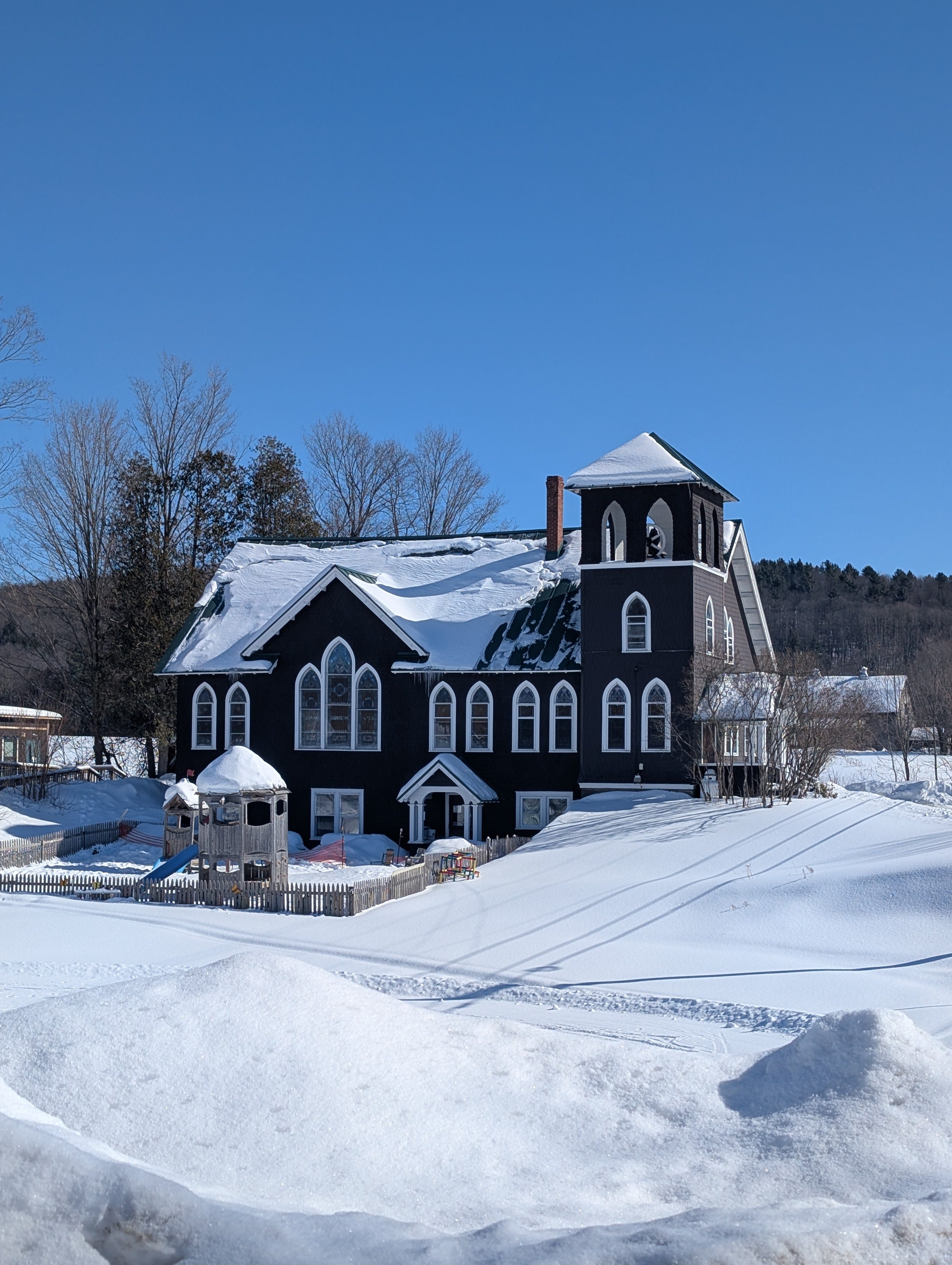
But we need not be this way. We can be with one another in true fellowship. We need not have tabernacles between us and God, nor tabernacles with each other. We can seek more and more honest and authentic relationships with one another. We can be more and more honest with God and each other about our doubts, our failures, and our regrets. We are here to practice growing in holiness, not to perform it nor believe we can perfect it. A church building isn’t a place to protect holy people from sinners, but for all of us to be gathered in God’s presence.
Today, this Transfiguration Sunday, God is daring us to be sinners in his presence. God is daring us to be sinners together. That’s the Almighty God, you know, the one who controls the wind and is brighter than the sun. But, as today’s Affirmation of Faith reads,1 his true glory was in the form of a servant—wisdom in a cross, goodness in receiving sinners.
The true power of our Almighty, transfigured God is that he wants to be in a relationship with you. And he loves when we are in a relationship with each other in his presence together.
Over the weeks of Lent that lead up to the cross, whether we’re giving up chocolate or reading the Bible every day for the first time in years, we will remember Jesus’ journey with us. So listen to him: you don’t need to hide from our glorious God. And if none of us are hiding from God together, then we don’t need to hide from each other. So once more: Merry Christmas, sinners. God is with us. Amen.
Today’s service had an Affirmation of Faith excerpted from the Confession of 1967: “God’s sovereign love is a mystery beyond the reach of man’s mind. Human thought ascribes to God superlatives of power, wisdom, and goodness. But God reveals his love in Jesus Christ by showing power in the form of a servant, wisdom in the folly of the cross, and goodness in receiving sinners. The power of God’s love in Christ to transform the world discloses that the Redeemer is the Lord and Creator who made all things to serve the purpose of his love.”